Safe Launch: The Post-PPAP Monitoring Period

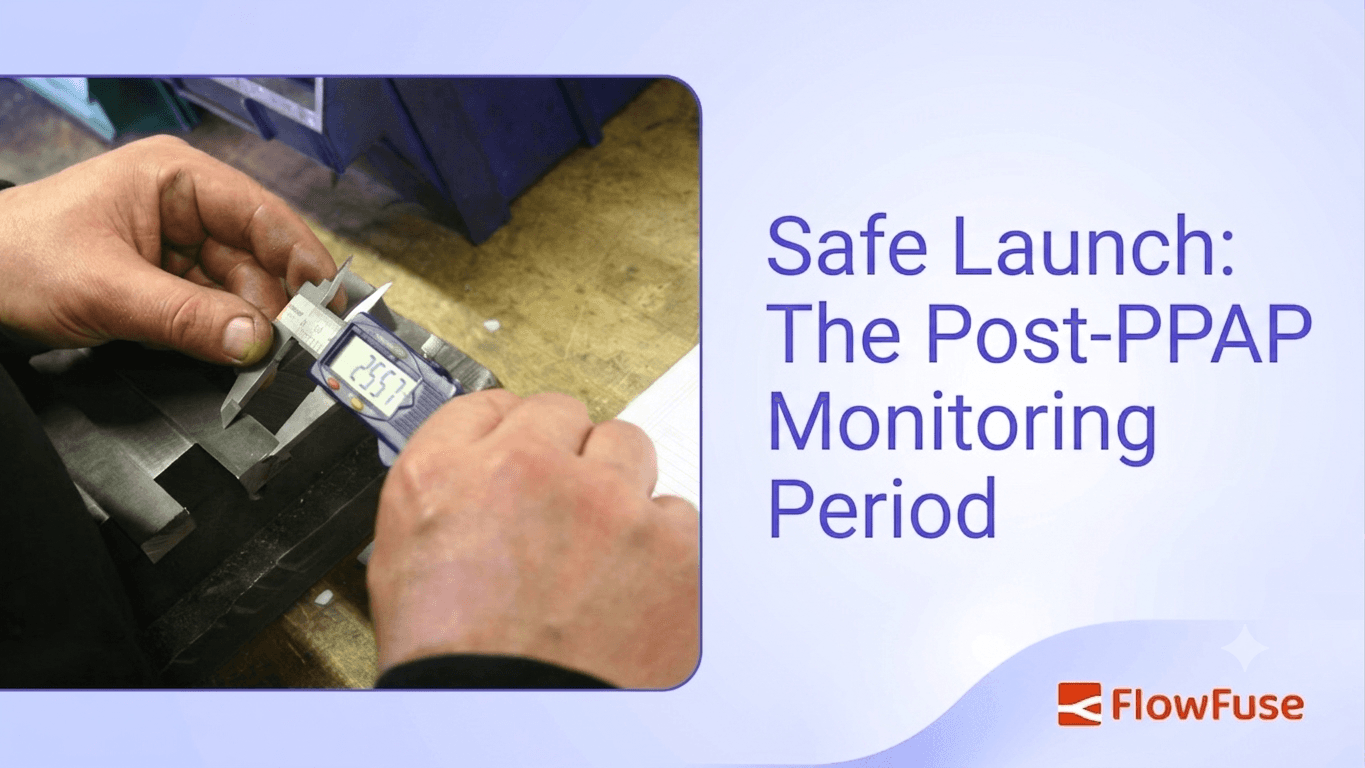
- Safe Launch Starts Where PPAP Ends: PPAP proves capability over a significant production run, typically 300 consecutive parts. A safe launch program proves the process holds that capability over months, across every shift, operator, and a full tooling wear cycle.
- Escalation Beats Observation: Safe launch is already a containment event. Defined thresholds tied to live production data catch a drift before it turns into a customer complaint or an extension of the containment period.
- Containment Data Should Outlive the Launch: Insights captured during early production containment can be standardized into reusable operational applications, giving future launches a stronger starting point across every plant.
PPAP approval feels like the finish line. For most suppliers, it is the point at which the customer starts watching most closely. Different OEMs give this period different names. GM calls it GP-12, or early production containment. Ford and others call it safe launch. The requirement is broadly the same: a defined window of additional inspection sitting on top of your normal process controls, starting at first production shipment and ending only when the customer says so.
What is a Safe Launch Automotive Program, and Why Does it Start After PPAP?
A safe launch program is a defined containment period that runs from the first production shipment. It usually follows PPAP approval, though a supplier operating under interim approval is often required to contain from day one. PPAP proves capability over a significant production run, typically 300 consecutive parts at production rate on production tooling. Safe launch proves the process holds that capability over months, across every shift, every operator, and a full tooling wear cycle. For manufacturers running automotive manufacturing solutions across multiple plants, that distinction matters because failure modes at launch rarely match what showed up in validation.
This is why safe launch exists as its own phase. A redundant inspection layer, tighter reaction limits, and faster escalation paths catch issues that a one-time approval cannot. In most programs this means 100% inspection of specified characteristics, carried out separately from the normal in-process checks, not a higher sampling rate. Without them, defects can reach hundreds of vehicles before anyone notices a trend, turning a manageable process shift into a costly field action.
Building a Safe Launch Plan for the Post-PPAP Monitoring Period
A safe launch plan gives structure to what would otherwise be a loosely managed monitoring period. It defines how long the elevated scrutiny lasts, what triggers an escalation, and who owns the response when a defect trend appears. Four elements determine whether that plan actually works on the shop floor.
Containment Inspection That Sits On Top of Normal Controls
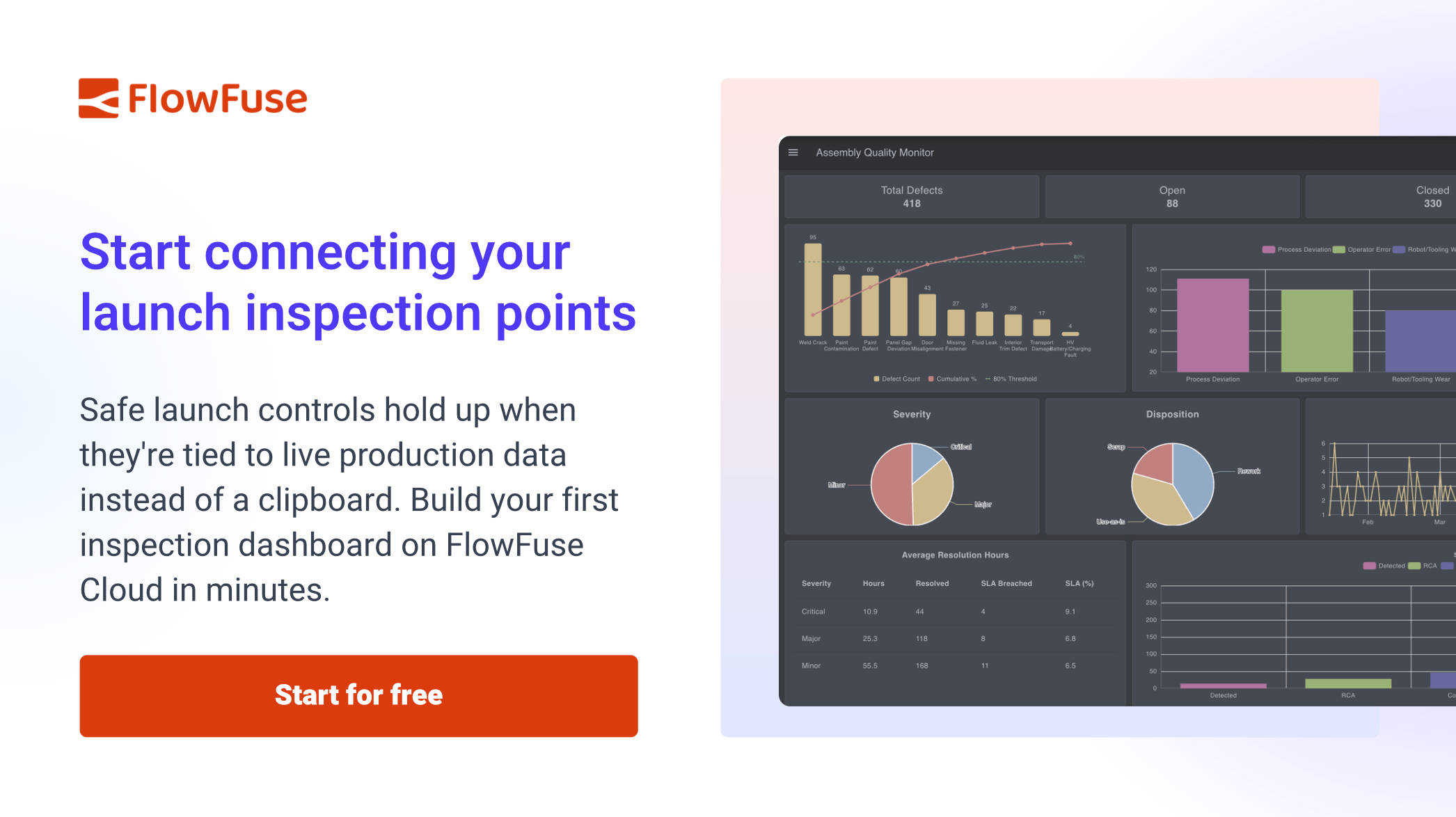
Containment inspection is additional, not a substitute. It runs at a dedicated station downstream of the normal process, covering the characteristics the customer specified, usually at 100%. Operators need to see which characteristics are under containment and what the current results look like, on the line, in the shift they are working. Real-time production monitoring turns that into a live view instead of a paper checklist.
Escalation Criteria Everyone Understands
A safe launch plan fails when escalation depends on someone noticing a problem manually. Defined thresholds, tied to real-time production monitoring data, remove that guesswork and route alerts to the right person before a trend becomes a containment event.
Exit Criteria Set by the Customer, Proven by You
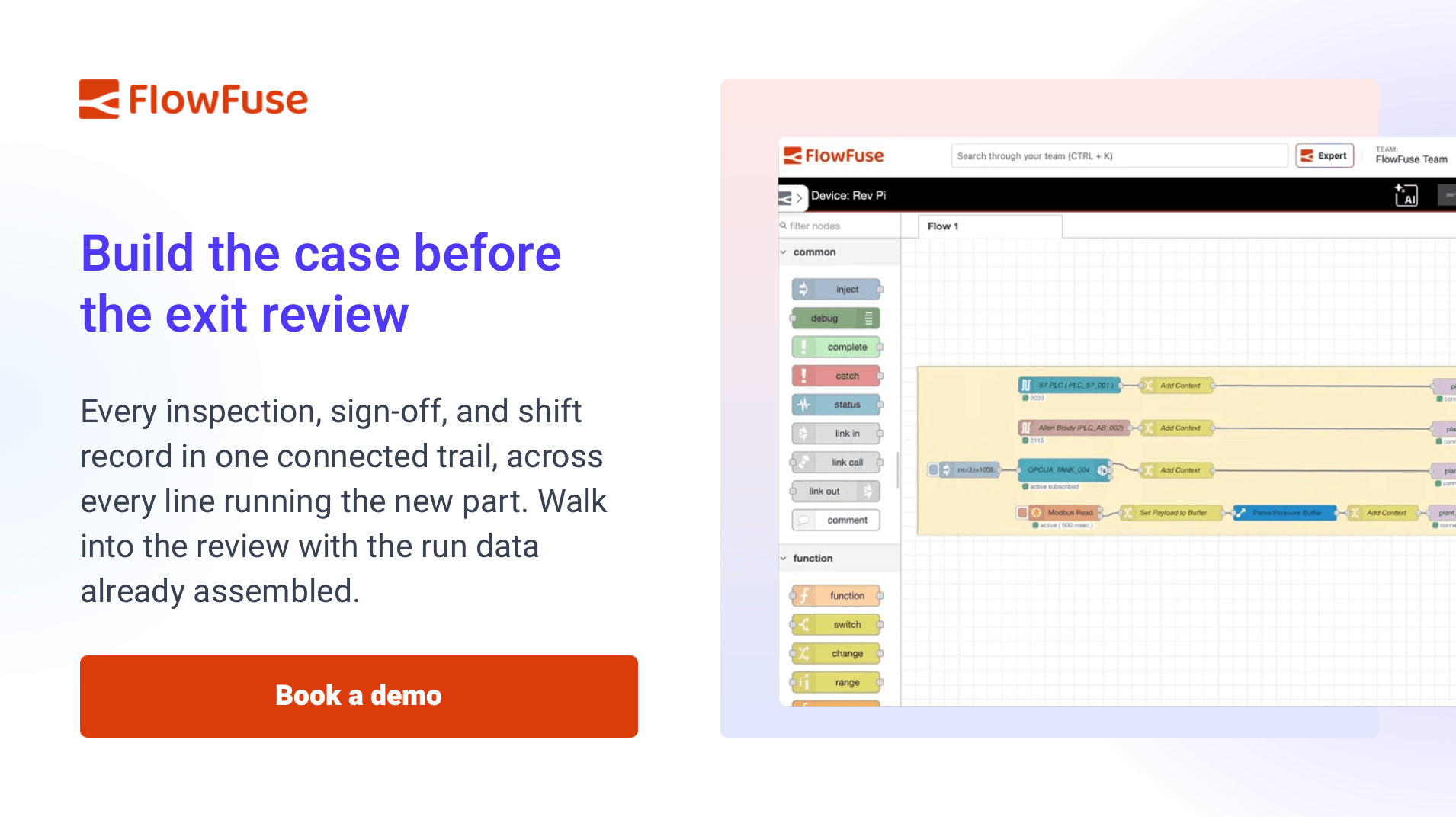
The customer defines the exit criteria at the start, usually a combination of elapsed time, cumulative volume, and zero containment defects. You cannot exit unilaterally. You build the evidence, request release, and wait for sign-off. A defect found during the window normally resets the clock rather than simply extending it, which makes a clean, continuous record worth more than a strong average.
Identification of Contained Parts
Parts that clear containment inspection carry a customer-agreed label or mark, applied from a defined start date, so the receiving plant can tell contained stock from anything shipped before the program began. Missing or inconsistent identification is one of the most common reasons a containment period gets extended.
Early Production Containment: Turning Launch Data Into Long-Term Quality Gains
Early production containment generates a large volume of data in a short window, but most of that data gets archived once launch monitoring ends. This is a missed opportunity. The same data used to catch defects during launch can improve quality processes well beyond it: three approaches make that connection possible.
Feed Containment Data Into Standard Quality Workflows
Containment findings should not disappear once a program exits its monitoring period. Applying the same defect and quality monitoring logic used during launch to standard production keeps defect detection sharp long after containment ends.
Use Launch Insights to Improve Future Programs
Every launch surfaces failure modes specific to a part, process, or line. Capturing those patterns in a reusable operational application means the next launch starts with better containment plans and escalation thresholds instead of starting from scratch.
Standardize Containment Logic Across Plants
A containment workflow built for one line can run at every site without rebuilding it, following FlowFuse's build once, run everywhere approach to automotive manufacturing, so standardized workflows scale across brownfield environments instead of starting over at each plant.
Final Thoughts
A safe launch program only works when it treats the post-PPAP period as its own discipline, not an extension of validation. That means containment inspection layered on top of normal controls, escalation paths that do not depend on manual observation, and exit criteria the customer sets and you prove. Getting this right protects against the kind of defect trends that turn into costly field actions.
The bigger opportunity is what happens to that containment data afterward. Instead of archiving it once monitoring ends, manufacturers can carry those insights into standard quality workflows and future launches. An industrial application platform like FlowFuse makes that possible by letting quality teams build a containment workflow once and run it everywhere it's needed, so every new launch starts ahead of the last one instead of rebuilding the process from scratch.
Get your next launch off to a clean start
Talk to us about connecting inspection points, escalation criteria, and containment reporting so you can prove your safe launch program held up and exit with confidence.
Frequently Asked Questions
About the Author
Sumit Shinde
Technical Writer
Sumit Shinde is a Technical Writer at FlowFuse specializing in industrial automation and manufacturing. In the past three years, he has built industrial applications and authored more than 100 technical articles covering industrial connectivity, unified data architecture, production metrics, and quality management for modern manufacturing.
Like what you're reading?
Add FlowFuse as a preferred sourceOn the page that opens, check the box next to flowfuse.com to see more of our articles in your Google Search results.
Related Articles:
- A Control Plan Template Your Shop Floor Will Actually Use
- End of Line Testing: Your Final Defense Against Defects
- Quality Assurance vs Quality Control: Fixing the Process or Checking the Product
- Buyer's Guide: How to Evaluate an Edge AI Platform for Industrial Use
- CQI-9 Heat Treat Audit: A Drifting Thermocouple Can Fail the Whole Furnace